6G Phones Will Transform Connectivity With an ‘Always-Sensing Network,’ Says Qualcomm CEO at Web Summit 2025
 Date: 17/11/2025
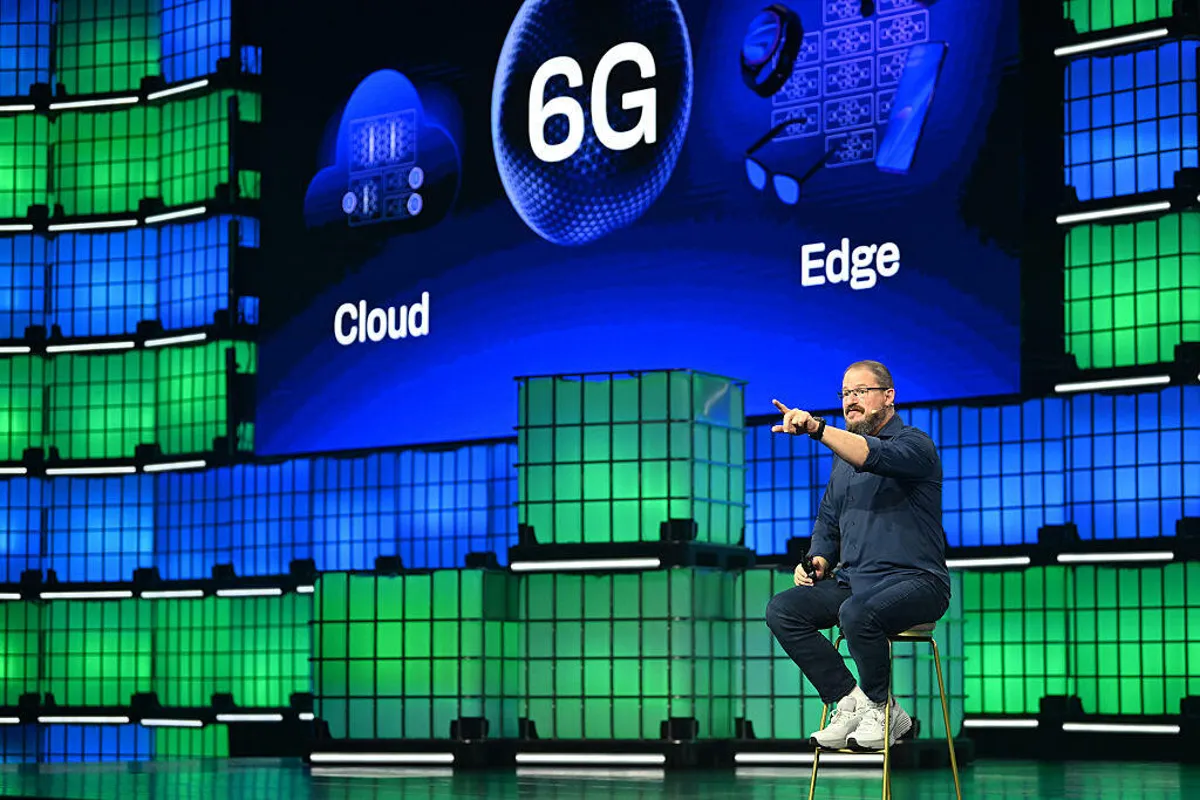
The next generation of wireless technology is quietly approaching, and it promises far more than faster downloads. At Web Summit 2025 in Lisbon, Qualcomm CEO Cristiano Amon revealed that 6G will be the first mobile network built specifically for the AI era, unlocking an “always-sensing” digital layer that surrounds users and their devices.
While the transitions from 3G to 4G and from 4G to 5G were highly publicized, 6G has remained mostly within the telecom industry’s inner circles. But Amon’s keynote makes one thing clear: 6G will redefine how devices understand our environment, our behaviors, and our interactions with artificial intelligence.
6G: The First Network Engineered for AI AgentsAmon described 6G as an essential foundation for the coming wave of autonomous AI agents — intelligent systems that can act independently, make decisions, and perform tasks without human intervention.
“6G is designed for AI,” Amon said. “It will sense what’s around us and give context to the AI systems that are going to work on our behalf.”
While 5G delivered high-bandwidth connectivity and low-latency performance, 6G is expected to push these boundaries much further, enabling:
-
Real-time contextual awareness
-
Precise environmental sensing
-
Stable agent-to-cloud communication
-
Faster and more reliable voice interaction
-
Near-zero latency responsiveness
According to Amon, each past network generation unlocked a major shift:
-
2G brought universal mobile voice calls
-
3G connected people to the internet
-
4G powered apps, social media, and mobile computing
-
5G enabled critical IoT and high-speed experiences
6G, however, will be the network that powers intelligent autonomy.
Voice Is Making a Comeback — Thanks to 6G and AIAs generative AI models advance, human–device communication is returning to a natural interface: voice.
Tools like ChatGPT, Gemini, and Copilot already interpret conversational language, and Amon believes this trend will accelerate dramatically in the 6G era.
“Voice is going to become important again,” he noted.
AI agents performing tasks — drafting emails, making purchases, analyzing data — will need an ultra-fast, seamless network to avoid delays or misinterpretations. This is where 6G’s responsiveness becomes critical.
In a world where autonomous agents may handle essential and sensitive tasks, even milliseconds matter.
The ‘Always-Sensing Network’: 6G Devices That Understand Their EnvironmentThe most transformative element of 6G is not speed — it’s sensing.
According to Amon, 6G devices will act as environmental sensors, using radio waves and contextual data to interpret surroundings.
“Devices will understand what we say, what we hear, and what we see,” he said.
This marks the birth of an “always-sensing network,” where devices gather information invisibly and intelligently.
6G radio waves could detect changes in a baby’s breathing patterns in real time, without needing a wearable sensor.
2. Mass Facial RecognitionThough controversial, 6G could technically enable simultaneous identification of large groups in public or private spaces.
3. Smarter, Context-Aware HomesDevices may automatically adjust lighting, climate, or security based on user movement, mood, or environmental cues.
4. Predictive AI AgentsYour personal AI could anticipate what you need before you ask — whether it's navigating traffic, managing schedules, or automating digital tasks.
Amon acknowledged the potential privacy concerns:
“I know it sounds a little bit scary,” he said. But he insisted that context-awareness is essential for safe, accurate AI operation.
With the first commercial 6G networks expected around 2030–2032, development is still underway — and the world is rapidly evolving.
AI is advancing faster than any previous technology, and by the time 6G arrives, agents may be far more capable, integrated, and autonomous than they are today. This creates a powerful combination:
AI that can understand, predict, and act — paired with a network that can sense, interpret, and support those actions instantly.
Amon describes this as solving “connectivity for the age of AI,” providing the infrastructure needed for real-world intelligence.
What Comes Next?Although 6G is still several years away, its potential impact is massive. It could reshape industries such as healthcare, logistics, education, smart cities, and personal computing.
What’s certain is that 6G will not simply be an upgraded 5G. It will represent an entirely new layer of connected intelligence — one that blends sensing, context, and AI to create experiences we’ve barely imagined.
The countdown to the next generation of mobile connectivity has officially begun.


.jpg)


.jpg)
.jpg)

