Motorola Unveils AI Wearable Concept ‘Project Maxwell’ at Mobile World Congress
 Date: 09/03/2026
Artificial intelligence is steadily reshaping the future of wearable technology, and Motorola is exploring new possibilities with its experimental device, Project Maxwell. The concept wearable, showcased at the Mobile World Congress in Barcelona, offers a glimpse into how AI-powered accessories could extend beyond smartwatches and glasses.
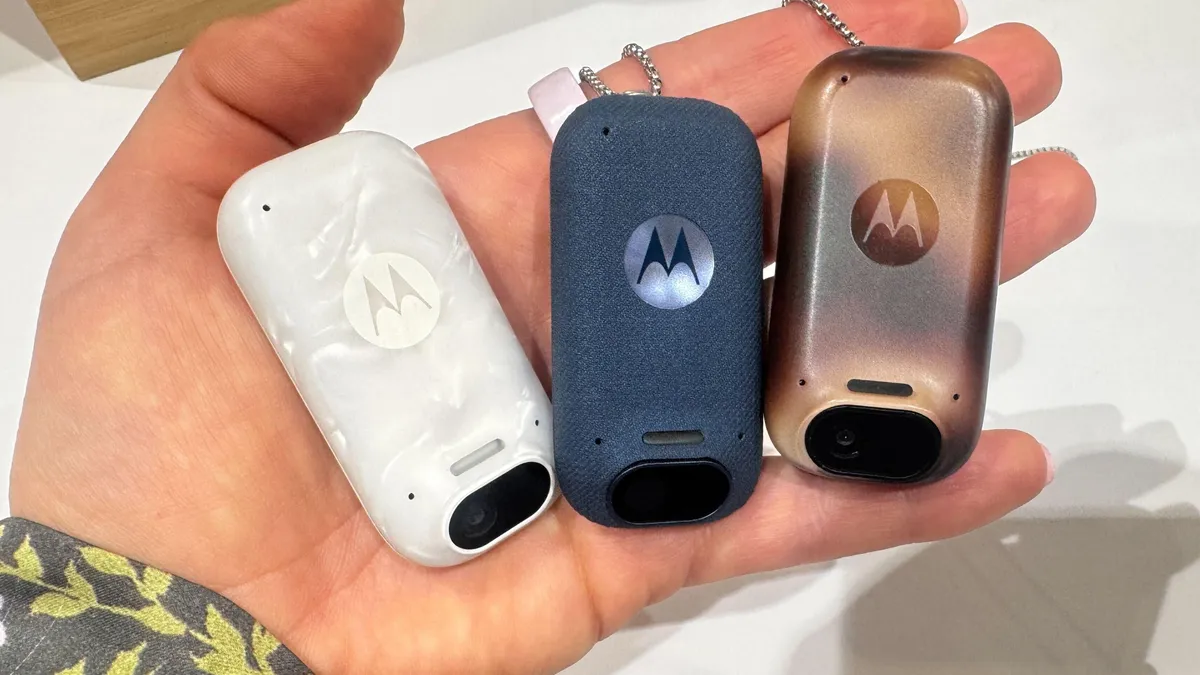
Project Maxwell is designed as a pebble-shaped pendant that hangs around the user’s neck. Equipped with a camera and microphones, the device acts as a perceptive AI companion that can see and hear the user’s surroundings. Rather than replacing smartphones, the pendant works alongside them, enhancing daily interactions through voice and visual intelligence.
The concept was developed by Motorola’s experimental innovation unit, 312 Labs, which focuses on exploring emerging technologies and unconventional form factors. According to the company, Project Maxwell aims to provide a more natural way to interact with digital assistants by combining voice and visual input—two of the most intuitive forms of human communication.
The wearable can perform several AI-powered tasks in real time. For example, it can scan and translate menus written in foreign languages, recommend dishes based on a user’s preferences, provide navigation guidance, and even translate conversations between people speaking different languages. These capabilities are powered by advances in large language models and agentic AI systems that enable contextual understanding.
Motorola also envisions the pendant as part of a broader AI ecosystem. Instead of functioning as a standalone device, Project Maxwell could collect contextual information—such as user habits, surroundings, and preferences—and share that data with other connected devices. This approach would allow smartphones, tablets, or other wearables to deliver more personalized and context-aware experiences.
Design plays a major role in the concept as well. The pendant has been created with a soft, pebble-like texture and is available in different colors and patterns, making it resemble a fashion accessory rather than a typical piece of tech hardware. Motorola believes wearables need to feel familiar and comfortable for users to adopt them widely.
The unveiling of Project Maxwell also reflects Motorola’s experimental approach to innovation. The company has a long history of exploring unique device concepts, including adaptive bendable phones and rollable displays. Through its research initiatives, Motorola continues to test new designs and technologies that could shape future consumer products.
The AI pendant currently runs on an earlier wearable processor, but upcoming advancements in wearable chips could unlock even greater capabilities. At the same event, Qualcomm introduced its new Snapdragon Wear Elite platform, which promises improved power efficiency and stronger on-device AI processing. Motorola confirmed that this technology could help the company push concepts like Project Maxwell even further.
While Project Maxwell remains a proof-of-concept device for now, it signals the company’s ambitions in the rapidly evolving AI wearables space. As smart glasses and smartwatches continue to dominate the market, Motorola’s pendant-style wearable suggests that entirely new form factors could emerge in the coming years.
Industry experts believe the wearable AI ecosystem is still in its early stages, and experimental devices like Project Maxwell could help redefine how people interact with technology—making it more hands-free, context-aware, and seamlessly integrated into everyday life.


.jpg)


.jpg)
.jpg)

