Rivian Unveils Custom AI Chip and Rooftop Lidar for R2 EVs Coming in 2026
 Date: 12/12/2025
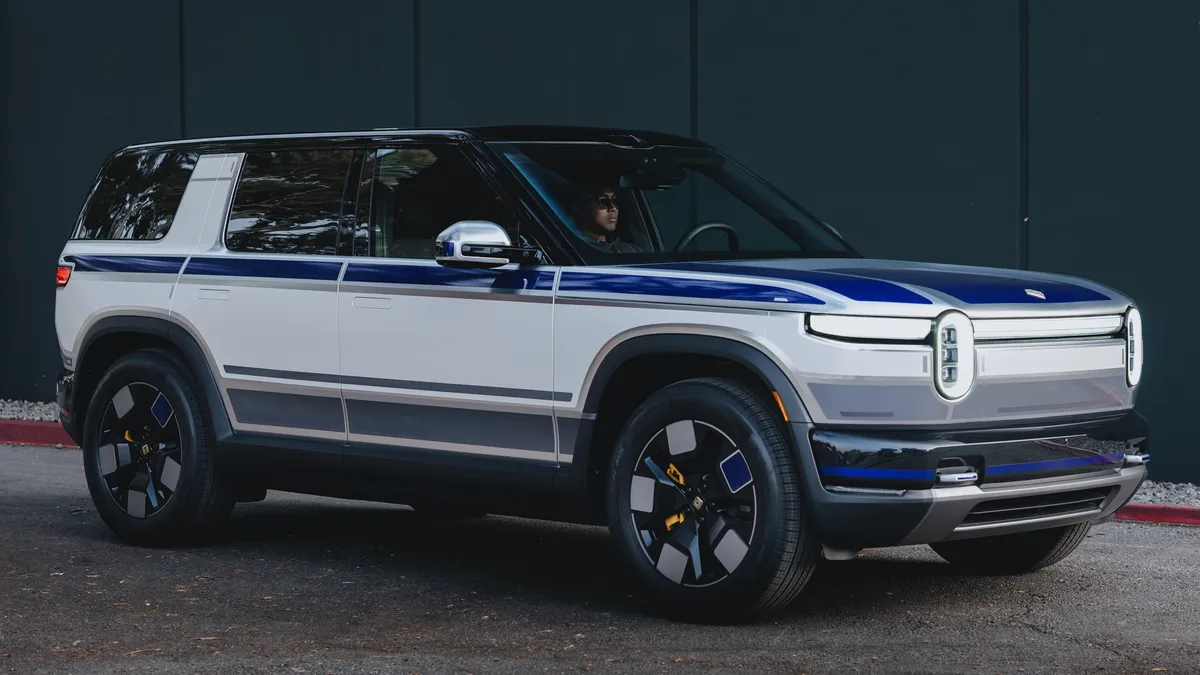
Rivian opened the doors of its Palo Alto, California, headquarters this week for its Autonomy & AI event, revealing major upgrades to its hardware and software stack. From a custom-built AI chip to rooftop lidar and a next-gen voice assistant, Rivian detailed how its future R1 and upcoming R2 electric vehicles will gain more advanced autonomous driving and smarter in-car technology.
The announcements mark a major step toward the company’s long-term goal: delivering hands-free, eyes-off and eventually Level 4 self-driving capabilities.
Rivian’s First In-House AI Chip: RAP1At the core of Rivian’s next-generation autonomy system is its first custom AI processor, the Rivian Autonomy Processor (RAP1). Two of these new modules will sit inside the brand-new Gen 3 Autonomy Computer (ACM3) powering the upcoming R2 SUV.
Rivian says the new system offers:
- 4× the AI performance of the current Gen 2 unit
- 2.5× more energy efficiency, which helps optimize EV power consumption
- Ability to process 5 billion pixels per second, preparing the vehicle for richer sensor input
While this may not drastically increase driving range, the efficiency gains matter in electric vehicles where every watt counts.
R2 EVs Get Lidar—Seamlessly IntegratedThe biggest hardware change comes in the sensor suite. The R2 platform will introduce a roof-mounted lidar unit, cleverly recessed above the windshield to avoid the bulky “taxi cab” lidar look seen on competing EVs.
Alongside the lidar, Rivian is upgrading its entire perception stack:
- 11 high-resolution cameras totaling 65 megapixels
- 5 redesigned radar units, with short-range radar powerful enough to eliminate ultrasonic parking sensors
- A cleaner, more aerodynamic exterior thanks to the hidden lidar placement
These upgrades significantly improve the vehicle’s real-world awareness, especially in low-visibility conditions where cameras alone fall short.
A Bold Autonomy Roadmap: From Hands-Free to Level 4Rivian also outlined its future driver-assist strategy, anchored by its new Large Driving Model—a next-generation AI system trained using methods similar to large language models.
The company’s autonomy roadmap includes:
Autonomy Plus — Launching in 2026Available for current R1 owners, this expanded hands-free package will cover:
- 3.5 million miles of highways and non-highway roads in the US and Canada
- Hands-free use on any road with clear lane markings
- Option to purchase for $2,500 or $50/month
With lidar and more powerful onboard computing, the future R2 EVs are expected to progress even further:
- Point-to-point hands-free capability
- Eyes-off autonomous driving
- Eventually, Level 4 autonomy, where the vehicle can drive itself in specified environments without human intervention
Rivian Assistant: A Smarter, More Integrated Voice AIBeyond autonomy, Rivian showcased its new AI-powered voice assistant, Rivian Assistant, designed to work both online and offline.
In a live demo, the assistant successfully:
- Accessed and edited a user’s Google Calendar
- Identified a meeting location and searched for nearby restaurants
- Sent restaurant options and updated ETAs directly to a meeting attendee
- Controlled in-car functions like seat heating using natural voice commands
If Rivian can maintain this level of deep integration, it could become one of the most capable voice assistants in the automotive world.
The assistant will begin rolling out to current R1T and R1S vehicles in early 2026, with native support on the R2 at launch later that year.
A Significant Leap for RivianWith its new AI chip, advanced sensor platform and a smarter voice assistant, Rivian is positioning the R2 not just as an affordable EV, but as a technologically ambitious step into autonomous driving’s next era.
As the company moves toward Level 4 capability, the 2026 R2 may become one of the most future-ready electric SUVs on the market.


.jpg)


.jpg)
.jpg)

