Thinking About Buying a $20,000 Home Robot? Here’s the Full Story Behind Neo — the New AI Humanoid Assistant
 Date: 01/12/2025
The future of household automation may finally be arriving — but it’s coming with a $20,000 price tag, a four-hour battery and a few major caveats. Meet Neo, the humanoid robot developed by California-based robotics company 1X, now available for preorder for just $200 down. Touted as one of the first “consumer-ready humanoids,” Neo aims to bring a long-imagined sci-fi fantasy into real homes: a walking, talking assistant capable of doing your chores.
But as early adopters consider whether to invest in the robot equivalent of a budget car, there’s a lot more to understand about what Neo can truly do — and what it still needs help with.
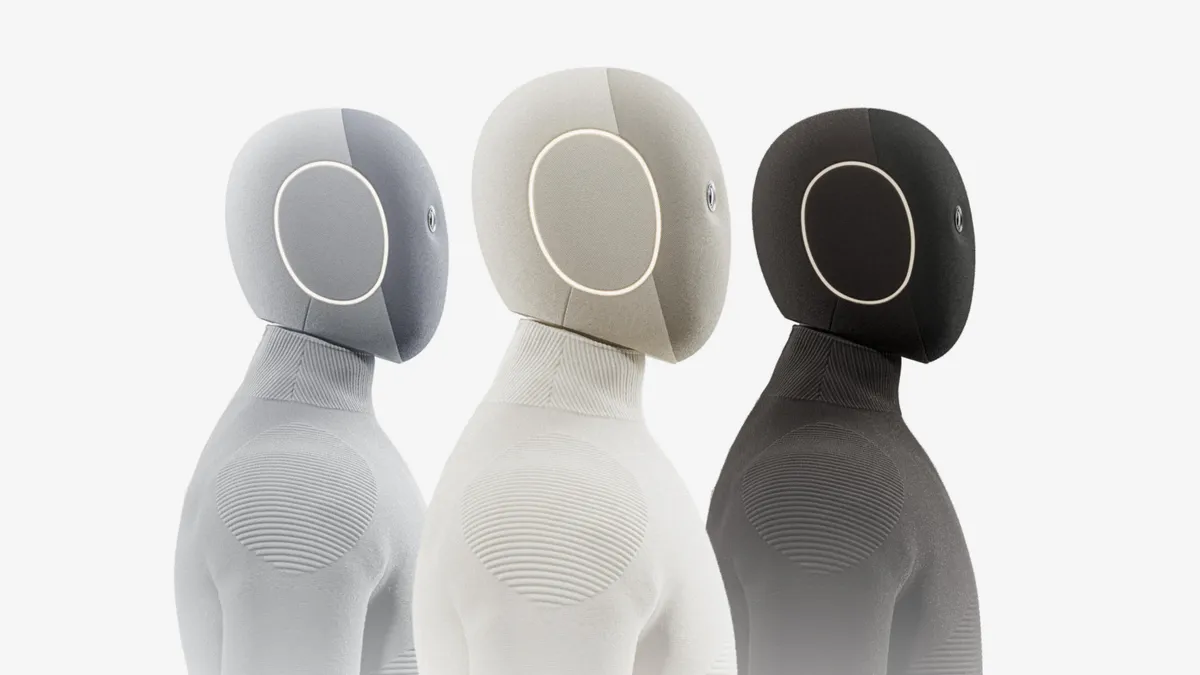
A Human-Sized Robot Designed for Daily Household TasksNeo stands 5 feet 6 inches tall, weighs about as much as a large dog, and looks intentionally soft and non-threatening — a far cry from shiny, metal humanoids seen in factories or research labs. 1X says this design is deliberate, meant to make Neo blend into a modern home environment without intimidating its owners.
The company claims Neo can perform a wide range of household chores, including:
- Folding laundry and organizing shelves
- Bringing in groceries and carrying up to 55 lbs
- Running a vacuum or assisting with cleaning
- Opening doors and climbing stairs
- Acting as a home entertainment and voice-controlled hub
The robot’s movement appears unusually smooth and human-like thanks to tendon-driven motors, a system that gives Neo both strength and flexibility. It can also lift up to 154 pounds, making it one of the strongest household robots ever announced. Its hands are IP68-rated, meaning they are waterproof enough to be submerged — useful for kitchens and cleaning tasks.
Connectivity includes Wi-Fi, Bluetooth and 5G, while a built-in large language model allows users to talk to Neo naturally, as if speaking to a smart assistant with a physical body.
Teleoperation: The Hidden Truth Behind Neo’s AbilitiesDespite the futuristic demos, much of Neo’s functionality today relies heavily on human teleoperation. As reported by The Wall Street Journal, many tasks that appear autonomous are actually performed by a human operator remotely controlling Neo through a VR headset.
Journalist Joanna Stern observed that Neo did little independently during her demonstration: “I didn’t see Neo do anything autonomously,” she wrote — aside from a single video clip of the robot opening a door on its own.
1X acknowledges this reality. CEO Bernt Børnich says that Neo will gradually gain autonomy, with “most tasks” expected to be handled automatically by 2026. However, the company warns that early performance "may lag," and customers may need to schedule remote expert assistance when Neo can’t complete a task.
In other words, Neo may not be the fully independent household helper it appears to be — not yet.
The Price of Convenience: What About Privacy?Buying Neo means inviting a walking AI system into the private spaces of your home. And that raises serious questions about data, privacy and trust.
Neo uses a mix of sensors, microphones, cameras and contextual intelligence to understand its surroundings. It can “see,” “hear” and “remember” interactions to improve over time. This data is key for learning — a process early adopters must be comfortable with.
1X says it is taking steps to ensure user privacy:
- Neo listens only when directly spoken to
- Cameras automatically blur humans
- Homeowners can block certain rooms or areas
- No teleoperation occurs without explicit approval
Still, the concept of a humanoid robot capturing data inside a home is a major leap for consumers. Even Børnich admits buyers must accept a new “social contract”: part of purchasing Neo is helping it learn.
Expert Reactions: A Mix of Excitement and SkepticismNeo’s debut has sparked strong reactions in the tech community. Some see it as the first real step toward mass-market humanoid robots. Others are more cautious.
Tech veteran John Carmack, known for his work in VR and iconic games like Doom and Quake, offered a critical take, arguing that companies should be more transparent:
“Companies selling the dream of autonomous household humanoid robots today would be better off embracing reality and selling ‘remote operated household help.’”
This perspective highlights the gap between consumer expectations and the current technological reality.
Shipping Plans and Pricing OptionsThe first Neo units are expected to ship in the United States in 2026. A broader global rollout is planned for 2027.
Pricing options include:
- $20,000 full purchase price
- $499 monthly subscription, coming at a later date
For early adopters, the biggest appeal may be participating in a new wave of AI robotics. But the biggest challenge will be adjusting expectations — Neo is not yet Rosie the Robot from The Jetsons. It’s closer to a hybrid: a semi-autonomous helper with human backup behind the scenes.
A Glimpse of the Future — But Not Quite There YetNeo represents one of the most ambitious attempts yet to bring humanoid robots into everyday homes. It blends advanced engineering with cutting-edge AI — but still depends on remote workers, early user participation and a steep financial commitment.
For now, Neo is a promising prototype rather than a fully independent household companion. But for enthusiasts willing to pay the price and embrace the experiment, Neo may be the first step toward the sci-fi future the world has imagined for decades.


.jpg)


.jpg)
.jpg)

